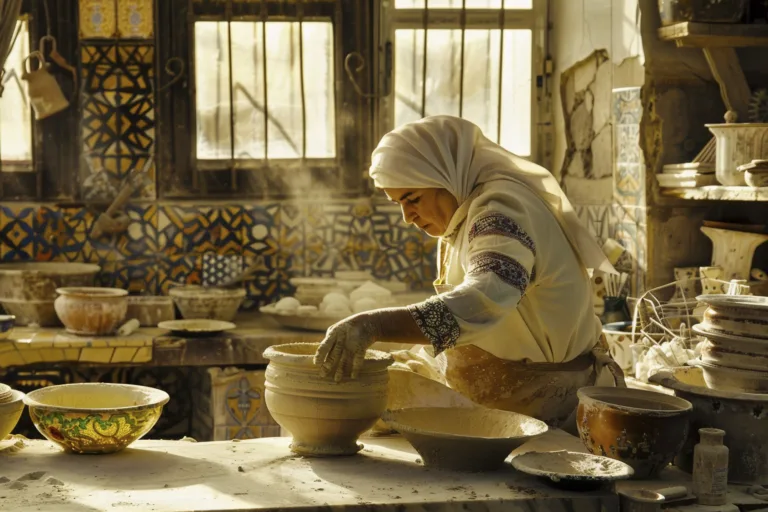

Protecting Morocco’s Cultural Heritage: Zellige safeguarded with WIPO Support

New WIPO agreement aims to secure fair recognition and economic benefits for Moroccan artisans.

Morocco is putting more effort into protecting its cultural heritage, starting with Zellige, one of the country’s most famous traditional crafts. In April 2024, the Minister of Culture met with the Director General of WIPO to work on an agreement that could help protect local artisans from cheap copies and unfair use of their work. It’s a clear sign that Morocco wants to use intellectual property in a way that supports the people and communities behind these crafts.

Zellige, sometimes spelled Zellij, is a traditional Moroccan mosaic tilework made from hand-cut pieces arranged in intricate geometric patterns and set into plaster. This craft is a hallmark of Moroccan architecture, found in palaces, fountains, and mosques, and is produced using techniques passed down through generations. It is a big part of the country’s cultural identity and helps thousands of families make a living. As Moroccan patterns gain global popularity, unauthorized copying and misuse are increasing concerns. (Oxford Reference, Britannica)

In recent years, Morocco has faced everything from regional claims to global brands using Zellige designs without giving proper credit. Algeria’s push to have Zellige listed as its own UNESCO heritage and the Adidas jersey controversy are just two examples. (Morocco World News). Morocco took key steps to protect Zellige, by first registering it with WIPO and exploring patent protection in October 2022. Then, in April 2024, the Culture Minister met with the WIPO Director General to reinforce these efforts and to ensure that local artisans benefit from their heritage. .

Protecting crafts like Zellige isn’t just about national pride; it’s about making sure the people who make them are rewarded with fair returns. That’s where intellectual property comes in. Morocco is looking at options like Geographical Indications (GIs), which connect a product’s quality and reputation to where it comes from. This has worked well for Moroccan Argan oil, which gained international GI protection in 2011.

Another option is to recognize Zellige as a Traditional Cultural Expression (TCE). This gives communities a say in how their cultural symbols are used, making it harder for companies or other countries to claim them unfairly. WIPO has supported countries in protecting TCEs for years, though it remains an evolving part of IP law (WIPO TCEs). If the new deal with WIPO moves forward, it could give local artisans more tools to stop cheap copies and grow the market for genuine, locally made Zellige.

Morocco’s efforts put it alongside other countries that use IP law to protect traditional crafts. India, for example, has secured Geographical Indications for dozens of local products, from Banarasi silk sarees to Darjeeling tea, helping rural communities earn more while keeping their heritage alive. Turkey did something similar with its famous Antep Baklava.

But in North Africa, there’s still tension over who “owns” certain crafts. Algeria’s bid for UNESCO status is one example of overlapping cultural claims. For Morocco, having a clear IP framework could help settle these disputes and strengthen its position as a leader in protecting cultural heritage in the region. As global demand for authentic, handmade goods grows, proper legal protection means buyers know they’re getting the authentic product and the people who make it get the credit and income they deserve.

Morocco’s push to protect Zellige shows that intellectual property can do more than just guard ideas, it can uplift communities, preserve cultural identity, and help traditional crafts to compete fairly. If the new WIPO agreement goes ahead, artisans could have stronger rights and more effective means to stop misuse. But laws alone aren’t enough. Buyers need to know what they’re supporting, rules must be enforced locally, and younger generations must be encouraged to keep these skills alive. By combining modern IP tools with community action, Morocco can show how traditional knowledge, and cultural expressions can thrive in a world that values authenticity more than ever.

WIPO : Traditional Cultural Expressions
https://www.wipo.int/tk/en/folklore/

Safeguarding Brands in Jordan’s Social Media Marketplace: Legal Risks, Challenges, and Practical Solutions

Social media has changed the way businesses operate worldwide, and Jordan is no different. Platforms like Facebook, Instagram, YouTube, and Snapchat have become essential tools for small businesses, home entrepreneurs, and informal sellers to reach customers and grow their sales. While these platforms open new doors for business, they also bring challenges, especially when it comes to protecting brands and intellectual property.

Recently, Jordan has seen a rise in issues like trademark infringement, fake products, brand impersonation, and misleading ads on social media. These problems threaten not just businesses, but also consumers who rely on trustworthy brands. 

The Growth of Social Media Commerce in Jordan


Social media use is growing in Jordan. According to recent reports, trademark registrations jumped by 69% in 2023, showing that more businesses are becoming aware of the importance of protecting their brands. Social media offers sellers an affordable way to reach and connect with customers, often without the need for a physical store.

However, these platforms can also be a double-edged sword. They make it easier for counterfeiters and unauthorized sellers to market fake or knockoff products, often hiding behind anonymous accounts. With many sellers operating informally, and regulations lagging behind, keeping the digital marketplace clean is a real challenge.

Jordan’s Legal Framework for Trademark Protection


Trademark Law: Jordan’s trademark system is mainly governed by Law No. 33 of 1952, updated by Law No. 15 of 2008. This law sets the rules for registering, protecting, and enforcing trademarks. Once registered, a trademark is protected for ten years, with the possibility of unlimited renewals. Jordan is also a member of the WTO and complies with the TRIPS Agreement, meaning its trademark laws align with international standards.

Cybercrime Law: In 2023, Jordan introduced Cybercrime Law No. 17 to address online offenses, including digital fraud and misuse. While this law strengthens the fight against cybercrimes, some worry about its impact on free expression and how it will affect IP enforcement online. Its full implications for brand protection,especially dealing with counterfeit sales and impersonation on social mediaare still unfolding.

Enforcement: Trademark owners in Jordan have several tools at their disposal, including sending cease-and-desist letters, filing complaints with authorities, and pursuing civil or criminal cases. But enforcing rights online is tricky: cases can be slow, and anonymous infringers are hard to track down.

Common Brand Infringements on Social Media


Here are some typical problems brands face in Jordan’s social media scene:

  • Unauthorized use of logos or brand names in ads and product listings to trick customers.
  • Fake or imitation products that look like the real thing, confusing buyers and hurting brand trust.
  • “Squatting” on social media handles or domain names that mimic legitimate brands redirecting traffic or reselling accounts.
  • False advertising that promotes counterfeit or low-quality goods under well-known brand names.

These practices don’t just damage brand reputation but also pose serious risks, especially in sectors like cosmetics or pharmaceuticals where safety matters.

Practical Tips for Brand Protection in Jordan


If you own a brand in Jordan, here are some smart steps to protect yourself:

  • Monitor Your Brand: Keep an eye on social media regularly, using both manual checks and automated tools to spot misuse quickly.
  • Legal Action: Work with IP lawyers to send cease-and-desist letters or file complaints when you find infringement.
  • Educate Customers: Use campaigns to inform your customers about how to spot official products and why counterfeits are dangerous.
  • Digital Evidence Management: Save screenshots, timestamps, and metadata to support any legal claims you might need to make.
  • Register and Record: Make sure your trademarks are officially registered and consider customs recordal to stop counterfeit imports.

Conclusion


Jordan’s social media market is full of exciting opportunities but also exposes brands to new and evolving risks. The country’s legal system provides a solid foundation for trademark protection, but adapting to the digital world means embracing better enforcement methods, technology, and cooperation between brands, platforms, and authorities.

Through vigilance, legal action, consumer education, and advocacy for stronger regulation, brands in Jordan can defend their intellectual property and help create a safer, more trustworthy online marketplace.

References


Jordan Times. (February 25, 2024). https://www.jordantimes.com/news/local/trade-ministry-says-trademark-registration-increases-69-2023
Jordan Times. (October 10, 2023). https://jordantimes.com/news/local/court-first-instance-opens-new-section-commercial-cases
Jordan Cybercrime Law No. 17 (2023).
Jordan News: Jordan records surge in trademarks and patents: Ministry report. Published May 01, 2024
Albawabah: Jordan’s new cybercrime law may disrupt social media. Published August 3rd, 2023

Anti-counterfeiting in the United Arab Emirates: The Current

Introduction


Strategically located at the crossroads of Europe, Asia, and Africa, the United Arab Emirates (UAE) plays a pivotal role in global trade, serving as one of the world’s biggest logistics and re-export centers. Dubai’s position as an international shipping and air transit hub makes it a key point for goods transported between East, West, and Africa. This accessibility has made the UAE, including ports like Jebel Ali, a hub for counterfeit goods. Counterfeit products may enter the country for domestic sale or transit to other regions, sometimes concealed within legal shipments.

Although the UAE has introduced legislative and enforcement measures to address counterfeiting, the large volume of goods moving through its borders continues to pose challenges to the protection of intellectual property rights.

Scope of Counterfeiting


Counterfeiting in the UAE affects a broad range of products, including luxury goods (handbags, watches, perfumes, apparel, and electronics), automotive parts, pharmaceuticals, toiletries, and cigarettes. Counterfeit items are typically sold in informal or low-cost markets, particularly in Dubai districts like Deira and Al Karama.

UAE authorities have ramped up enforcement in recent years, resulting in increased seizures and raids. For example, over the five years 2019–2024, Dubai Police’s Economic Crimes Department reports confiscating approximately AED 8.7 billion (~USD 2.3 billion) worth of counterfeit goods.

UAE Legal Framework


The UAE is a civil law country, comprising seven emirates: Abu Dhabi, Dubai, Sharjah, Ajman, Ras Al Khaimah, Fujairah, and Umm Al Quwain. Each emirate can operate its own court system or join the federal judiciary. IP disputes can be heard by federal or local courts, depending on the case.

Intellectual property rights are protected by federal law, but enforcement occurs at the local level. Key federal legislation includes:

  • Federal Trademarks Law (Federal Decree Law No. 36 of 2021 on Trademarks): Governs trademarks and infringement, expanding protection and increasing penalties for counterfeiting.
  • Federal Copyright Law (Federal Decree-Law No. 38 of 2021): Criminalizes unauthorized copying, distribution, or commercial exploitation, with imprisonment and fines ranging from AED 100,000 to AED 700,000.
  • Anti-Commercial Fraud Law (Federal Decree-Law No. 42 of 2023): Imposes strict penalties on suppliers of counterfeit goods, including up to 2 years’ imprisonment and fines up to AED 1 million.
  • Consumer Protection Law (Federal Law No. 15 of 2020): Prohibits misleading descriptions and unsafe or counterfeit products; fines up to AED 2 million and closure of businesses are possible.
  • GCC Unified Customs Law: Provides the basis for border enforcement, including detention of suspected counterfeit goods in transit.

The UAE is also a party to all major IP treaties strengthening its anti-counterfeiting regime.

UAE Anti-Counterfeiting Enforcement Mechanisms


4.1. Enforcement Authorities

  • Customs Departments: Inspect imports/exports at ports, airports, and free zones; can seize counterfeit shipments. Dubai Customs has a dedicated IP Rights Department handling training, recordal, and seizures.
  • Police and Criminal Investigation Departments (CID): Conduct criminal investigations, raids, and undercover operations against counterfeiters.
  • Public Prosecution: Oversees criminal cases referred by police, ensuring judicial oversight.
  • Economic Development Departments (EDDs): Carry out administrative enforcement against counterfeit goods in local markets.
  • Federal Ministry of Economy and Tourism (MoET): Leads on IP policy, administers trademark registry, and coordinates federal-local enforcement.

4.2. Border Enforcement Procedures

  • Customs Inspections: Use risk profiling, intelligence, and random checks; suspicious shipments are detained for examination.
  • Notification of Rights Holder: Customs notifies trademark owners to confirm counterfeit status and initiate legal action.
  • Seizure and Evidence Gathering: Counterfeit shipments are seized, reports prepared, and samples retained for forensic verification.
  • Follow-up Actions: Customs can destroy confirmed counterfeit goods and refer criminal cases to police or public prosecution.

4.3. Customs Recordation

The UAE allows trademark owners to record registered trademarks with local customs databases. Currently, 5 of 7 emirates (Dubai, Abu Dhabi, Sharjah, Ajman, Ras Al Khaimah) have recordation programs. Only goods-related trademarks can be recorded. Required documents include the UAE trademark certificate, power of attorney, and recordation fee.

4.4. Administrative Enforcement

Rights holders can file administrative complaints with local authorities to confiscate counterfeit goods. Enforcement officials may raid premises without court formalities. Penalties include fines, forfeiture, and potential closure for repeat offenders.

4.5. Civil Enforcement and Remedies

Trademark owners can file civil lawsuits under Article 48 of the Trademark Law to seek damages. Remedies include:

  • Permanent injunctions to stop continued infringement.
  • Monetary damages for lost profits, brand harm, or investigation costs.
  • Ancillary orders: publication of judgment, cancellation of conflicting trade names, or closure of defendant’s business.
  • Costs: losing party may pay court fees and partial legal costs.

4.6. Preliminary/Interim Measures

  • Judicial Precautionary Measures (e.g., Anton Piller orders, asset freezing, travel bans, interim injunctions)
  • Customs Suspensions to temporarily hold goods during enforcement
  • Administrative Closure Orders for stores selling counterfeits

4.7. Criminal Enforcement and Remedies

Under UAE law, counterfeiting is a criminal offense. Key penalties include:

  • Imprisonment and fines between AED 50,000 – 1,000,000 depending on the offense
  • Confiscation and destruction of counterfeit goods, including packaging and machinery
  • Publication of judgment in newspapers or Official Gazette
  • Business closure orders (up to 6 months)
  • Additional sanctions under the Commercial Fraud Law (up to 2 years imprisonment, fines up to AED 1 million)

Conclusion


The UAE has developed a comprehensive legal and institutional framework to address counterfeiting, covering border, administrative, civil, and criminal enforcement. Effective anti-counterfeiting strategies require a multi-prong approach, combining border controls, administrative actions, and judicial proceedings. Criminal cases disrupt large-scale operations, while civil litigation offers compensation and injunctive relief. Online enforcement is increasingly important, requiring active monitoring and takedown procedures.

Success in enforcement relies heavily on proactive rights holder engagement and coordination with local authorities.

References


A Legal Perspective on Perfume Fragrances and Registration in GCC Countries: Can Scents Be Trademarked?

The Unique Allure of Scents


The unique and captivating allure of scents has long been a cornerstone of the perfume industry. Beyond their aesthetic and sensory appeal, scents raise intriguing questions within the legal framework of intellectual property: Can a scent, particularly the fragrance of a perfume, be trademarked? And if so, what is the position of the Gulf Cooperation Council (GCC) countries regarding the registration of scents as trademarks?

The Concept of Non-Traditional Trademarks


Traditionally, trademarks have been associated with visual signs such as logos, words, or symbols that distinguish goods or services. However, as markets evolve, so does the scope of trademarks. Non-traditional trademarks, including sounds, colors, and even scents, have emerged as significant tools for brand differentiation.

The trademarking of scents hinges on their ability to function as a unique identifier of the source of goods or services. To qualify for trademark protection, a scent must satisfy the fundamental criteria of distinctiveness, non-functionality, and graphical representation—requirements that vary across jurisdictions.

Global Jurisprudence on Scent Trademarks


Globally, the recognition of scents as trademarks remains a complex issue. Jurisdictions such as the United States and the European Union have seen cases where scents have been successfully trademarked, albeit under stringent conditions. For example, a floral fragrance used in sewing thread was granted trademark protection in the United States, as it was demonstrated to be distinctive and not essential to the product’s function.

However, these cases are rare and often accompanied by rigorous evidentiary requirements. The challenges stem from the difficulty in demonstrating distinctiveness and providing a precise graphical or written representation of the scent, which is a core requirement under many trademark laws.

Scent Trademarks in the GCC Region


In the GCC countries, trademark laws are largely influenced by the unified GCC Trademark Law, which governs trademark registration across member states, including Saudi Arabia, the UAE, Qatar, Oman, Bahrain, and Kuwait. While the law provides for the protection of trademarks that are capable of distinguishing goods or services, its provisions primarily address traditional trademarks such as names, logos, and symbols.

The registration of non-traditional trademarks, including scents, is not explicitly addressed in the GCC Trademark Law. This absence leaves room for interpretation and potential developments. However, practical challenges remain. For a scent to be registered, it must be represented in a manner that is comprehensible and acceptable to the trademark office. The lack of clear guidelines or mechanisms for the graphical representation of scents in the GCC countries poses a significant barrier to registration.

Practical and Legal Implications


From a practical standpoint, businesses seeking to trademark a scent in the GCC region face hurdles in proving distinctiveness and in complying with representation requirements. The distinctiveness of a scent must be demonstrated through evidence that consumers associate the fragrance with the specific goods or services. Additionally, the scent must not result from the functional nature of the product—for instance, the inherent fragrance of a cleaning product would not qualify.


Legally, the absence of precedents and explicit provisions on scent trademarks in the GCC creates uncertainty. While this could discourage applications, it also presents an opportunity for businesses and legal practitioners to shape jurisprudence in this area. Successful registration of a scent trademark in the GCC would likely require innovative legal arguments and robust evidence to satisfy the criteria of distinctiveness and representation.

The Future of Scent Trademarks in the GCC

As global markets increasingly embrace non-traditional trademarks, there is potential for the GCC countries to expand their trademark frameworks to accommodate scents and other unique identifiers. Such developments would require amendments to the GCC Trademark Law and the establishment of clear guidelines for the registration of non-traditional trademarks.

For businesses in the perfume and fragrance industry, the ability to trademark scents in the GCC could offer significant competitive advantages, allowing them to secure exclusive rights to unique fragrances and enhance brand recognition. However, navigating the current legal landscape requires careful planning, expert legal advice, and a proactive approach to intellectual property strategy.

Contact Our Team

Conclusion


While the concept of scent trademarks presents exciting possibilities, their registration in the GCC remains a challenging and largely uncharted area. Legal practitioners and businesses must engage with both the existing legal frameworks and the evolving trends in intellectual property law to unlock the potential of scent trademarks. By doing so, they can not only protect their innovations but also contribute to the development of a more inclusive and dynamic trademark system in the GCC region.

The Role of Intellectual Property Laws in Protecting the Fashion Industry in GCC Countries

The Growth of Fashion in the GCC


The fashion industry is a dynamic and ever-evolving sector that reflects creativity, innovation, and cultural identity. Globally, it is valued at over $2 trillion, and the Gulf Cooperation Council (GCC) countries—comprising Saudi Arabia, the United Arab Emirates, Qatar, Kuwait, Oman, and Bahrain—have emerged as a significant hub for luxury fashion, ready-to-wear apparel, and bespoke designs. Fueled by economic prosperity, strategic investments, and cultural diversification, the GCC region is witnessing unprecedented growth in the fashion industry. However, with such progress comes the critical responsibility to safeguard the industry’s lifeline: intellectual property (IP) rights.

The IP laws governing fashion are not merely legal instruments but essential tools for fostering innovation, protecting creative endeavors, and securing the economic interests of designers, fashion houses, and investors. In a region as ambitious and globally integrated as the GCC, the enforcement of IP laws becomes pivotal to maintaining the integrity of the fashion ecosystem.

The Foundations of Intellectual Property in Fashion


Fashion, unlike many other industries, relies heavily on intangible assets. The creative vision embedded in a designer’s sketches, the innovation behind fabric technologies, or the brand value associated with logos and names is what drives commercial success. These elements fall under various branches of intellectual property, including trademarks, copyrights, industrial designs, and trade secrets. Each of these legal tools plays a distinct yet complementary role in ensuring that the rights of creators and businesses are adequately protected.

For instance, a luxury fashion house like Chanel or Dior depends on its trademarks to protect its iconic logos and brand identity. Meanwhile, industrial design laws secure exclusive rights over visually aesthetic creations, such as handbags, footwear, and couture pieces. In essence, IP law becomes a safeguard against counterfeiting, piracy, and unauthorized use, all of which are major concerns in the GCC region’s fast-expanding markets.

The Legal Landscape of IP Laws in GCC Countries


GCC member states have made notable strides in developing robust intellectual property frameworks. These efforts align with international agreements such as the TRIPS Agreement (Trade-Related Aspects of Intellectual Property Rights) and the Berne Convention for the protection of literary and artistic works. While each GCC country maintains its own legislative nuances, there is increasing regional cooperation to harmonize IP protections.

Trademarks in the Fashion Industry


A trademark distinguishes the products of one brand from those of another. In the GCC, trademarks are regulated under the unified GCC Trademarks Law, which provides consistent standards across member states. Fashion brands benefit significantly from trademark registrations, which allow them to protect their logos, brand names, and symbols.

In the UAE, for example, a trademark registration ensures protection for 10 years, renewable indefinitely. Luxury hubs like Dubai have seen substantial growth in fashion retail, but they have also become targets for counterfeit goods. Authorities have implemented strict measures to combat trademark infringements, such as seizures of fake products and substantial penalties for violators.

In Saudi Arabia, similar emphasis has been placed on cracking down on counterfeits, particularly within its booming luxury sector. Local designers and international brands are encouraged to actively register trademarks to secure their brand value in this rapidly expanding market.

Copyright Laws Protecting Fashion Designs


Copyright law grants protection to original works of authorship, including fashion sketches, patterns, and designs. Under the Berne Convention—ratified by GCC states—copyright protection arises automatically upon the creation of an original work. However, challenges persist regarding enforcement, as fashion designs often blur the line between art and functional utility.

In jurisdictions like the UAE and Qatar, designers are encouraged to document and register their creations to strengthen their ability to enforce copyrights against infringers. For emerging designers, particularly those in culturally inspired fashion, copyright laws can serve as a crucial safeguard for unique creations.

Industrial Designs and the Visual Appeal of Fashion


Industrial design laws protect the aesthetic, non-functional elements of fashion products. These laws are particularly relevant for items like handbags, shoes, accessories, and bespoke garments. GCC countries allow for industrial design registration, typically granting protection for up to 10 years, provided the design is novel and unique.

International brands operating in the GCC—such as Louis Vuitton, Gucci, and Burberry—actively pursue industrial design protection to prevent knockoffs. Simultaneously, local designers are increasingly leveraging design rights to secure exclusivity and market differentiation.

Trade Secrets and Innovation in Fashion


Trade secrets offer another layer of protection for proprietary information, such as unique manufacturing processes, fabric formulas, and business strategies. In a competitive market like the GCC, where innovation drives success, trade secrets help fashion businesses maintain their competitive edge.

Challenges Facing IP Enforcement in the GCC Fashion Market


While the GCC has made commendable progress in IP legislation, certain challenges persist:

  • Counterfeit Markets: Despite rigorous anti-counterfeit measures, fake goods continue to infiltrate markets, particularly in e-commerce and informal retail channels. Counterfeit luxury products, such as handbags, watches, and shoes, pose significant risks to brand equity and consumer trust.
  • Lack of Awareness: Many local designers and small businesses are unaware of their IP rights or the steps needed to enforce them. As a result, creative works remain unprotected, leaving them vulnerable to exploitation.
  • Enforcement Mechanisms: The enforcement of IP laws, while improving, can still be complex, time-consuming, and costly for businesses. Cross-border infringements further complicate matters, necessitating greater regional cooperation.
  • Cultural Challenges: In certain GCC markets, there is a need to balance modern IP frameworks with traditional cultural values and practices. This tension, however, also presents opportunities for innovation rooted in cultural heritage.

Opportunities for Growth and Protection


To fully realize the potential of the GCC fashion industry, stakeholders must adopt proactive approaches to IP protection. Key strategies include:

  • Registration of IP Rights: Designers and businesses must prioritize registering trademarks, copyrights, and industrial designs across GCC markets to ensure comprehensive protection.
  • Collaborating with Authorities: Working with customs agencies and local authorities to combat counterfeit markets through seizures and penalties.
  • Leveraging Technology: Technologies like blockchain can be used to authenticate fashion products and prevent counterfeiting, while AI-driven tools can monitor online platforms for IP violations.
  • Educating Stakeholders: Awareness campaigns, workshops, and seminars can empower local designers, businesses, and consumers to respect and enforce IP rights.

Conclusion


The fashion industry in the GCC is experiencing an unprecedented renaissance, shaped by cultural evolution, technological innovation, and economic growth. As the region solidifies its position as a global hub for luxury fashion and creative excellence, intellectual property laws must remain at the forefront of this transformation.

IP protection is not merely a legal formality but a foundation upon which the fashion industry can thrive. By safeguarding creativity, innovation, and brand equity, the GCC can foster a sustainable, competitive, and globally recognized fashion ecosystem.

For IP professionals, policymakers, and stakeholders, the path ahead is clear: robust enforcement, proactive protection, and continuous education will pave the way for a brighter, more innovative future in the fashion industry. In the GCC, where heritage meets modernity, intellectual property is the bridge that ensures creativity is rewarded, businesses flourish, and the industry thrives for generations to come.

WIPO’s New Treaty on Intellectual Property, Genetic Resources and Associated Traditional Knowledge

A new historical Treaty on Intellectual Property, Genetic Resources, and Associated Traditional Knowledge was agreed upon at WIPO on May 24, 2024. The event is seen as a historic landmark, especially for Indigenous peoples, who see it as a great tool against the pillaging of their traditional knowledge and genetic resources.

The treaty was agreed upon by more than 190 nations. With the main aim of combating what Indigenous peoples call “biopiracy,” it makes it mandatory for patent applicants to disclose the origin of the materials used in their new inventions. Companies have been increasingly using genetic resources that are found in different forms of products, spanning from cosmetics and medicine to seeds, food supplements, and biotechnology.

The purpose of the treaty is to increase transparency on intellectual property pertaining to Indigenous traditional knowledge about resources. The treaty does not, however, address the issue of material compensation for Indigenous communities. The treaty is the culmination of more than 20 years of negotiations and work at WIPO, which described it as the first treaty to address “the interface between intellectual property, genetic resources, and traditional knowledge.”

The Indigenous Caucus group sees the treaty as a foundation for a sustainable future for all, as it recognizes the role of Indigenous peoples in the protection and survival of genetic resources by transmitting traditional knowledge from one generation to the next. While it is established that natural genetic resources are not considered protected intellectual property, it is, however, always possible to patent inventions developed using those resources. The main goal of the treaty is to combat biopiracy by ensuring that what is being patented is a genuine innovation while the countries and communities concerned agree on the usage of their genetic resources and traditional knowledge.

According to the treaty, patent applicants will have to disclose the origin of the genetic resources they used in their inventions and the Indigenous people who provided their traditional knowledge. This comes as a relief to the concerns of many developing countries, which have always been calling for further transparency regarding the origin of genetic resources. They have always been skeptical and suspicious that patents granted are circumventing the rights of Indigenous peoples.

The treaty also establishes that sanctions are to be imposed in accordance with the national laws of member countries adopting the agreement. There are already more than 30 countries that have mandated disclosure requirements in the texts of their national laws. This group of countries does not only include emerging market economies such as Brazil, China, India, and South Africa but also some Western countries, including Germany, France, and Switzerland.

It is worth mentioning that the disclosure procedure is not always mandatory. The text of the new treaty stipulates that countries “shall provide an opportunity to rectify a failure to disclose the information required… before implementing sanctions.” However, it denies such an opportunity for rectification in “cases where there has been fraudulent conduct or intent as prescribed by national law.” According to the treaty, a country is not allowed to “revoke, invalidate, or render unenforceable” a patent for the sole reason that necessary disclosure has not been made by the patent owner.

The text of the treaty comes as a finely balanced compromise between, on the one hand, the rights and legitimate concerns of Indigenous peoples and communities, and on the other hand, the advanced so-called first-world countries whose scientific and commercial entities are the most likely to come up with new inventions or patents where some of the knowledge can be based on genetic resources or traditional knowledge. The local communities wanted to preserve and protect their genetic resources and the traditional knowledge associated with those resources. The advanced countries wanted to foster innovation through the establishment of new patents.

The treaty aims to improve the patent system in terms of caliber, effectiveness, and transparency so that access conditions are implemented and respected and to ensure that the benefits derived from the utilization of genetic resources are properly shared. The new treaty guarantees the implementation of previous international agreements such as the Nagoya Protocol and the Biodiversity Agreement for Areas Beyond National Jurisdictions (BBNJ).

Contact Our Team

Collaboration Opportunities on Social Media

Combating counterfeiters on social media platforms involves cooperation between brand owners and platform enforcement structures. This cooperation can range from simple reporting procedures to takedown mechanisms and even joint lawsuits, where both the platform and brand owners take legal action against counterfeiters.

Collaboration with influencers often involves complex negotiations around royalty rights, contractual obligations, and termination rights. Influencers frequently build their own brands in parallel with the brands they promote, which can complicate matters. In some cases, collaborating with influencers may prove too costly or burdensome, in which case brands should consider refraining from such partnerships.

Social media messaging can significantly impact brand reputation, underscoring the importance of timely and accurate responses. Brands must be proactive in addressing issues and managing their online presence to protect their reputation effectively.

Brand Protection in the Age of Social Media

Social Media and Intellectual Property


The rise of social media has not only transformed the way individuals interact, but it has also significantly altered commerce, marketing, and the protection of intellectual property rights. With this transformation, new challenges have emerged for IP rights holders, as well as new opportunities for those who can leverage social media effectively. Brand protection in this new era involves multiple facets: legislation that adapts to the times, cooperation between brand owners and social media platforms, and the role of so-called “influencers” in supporting legitimate brands against counterfeiting.

Legislative Action and Challenges


Lawmakers face increasing difficulty keeping pace with the rapid evolution of social media and changing user behavior. The EU Digital Services Act aims to streamline online enforcement by holding social media platforms accountable for hosting illegal content and marketing counterfeit goods. Meanwhile, the US’s SHOP SAFE Act shifts liability to e-commerce sites, though its vague definitions can create challenges for brand owners, sellers, and customers. China has its own trademark protection regulations, while social media platforms also have internal policies to support brand protection efforts.

Existing and Emerging Risks for Trademark Protection on Social Media


Brand owners must understand the tools and techniques used by infringers on social media to properly assess threats and formulate a comprehensive online brand protection strategy. Social media can be a profitable avenue for brands, allowing them to maintain an online presence, protect their reputation, and safeguard their intellectual property rights—all while preserving customer loyalty and market share.

According to INTA officials, who support brand owners in the fight against counterfeiting, community engagement is crucial for success. However, challenges remain, especially regarding private messaging and closed groups, where monitoring could raise privacy concerns. Social media platforms must navigate these issues carefully to avoid alienating their user base.

Counterfeiters are adopting increasingly sophisticated tactics, including creating impostor websites, posting misleading advertisements, utilizing deepfakes, and fabricating fake conversations. Raising customer awareness is crucial in combating counterfeit goods on social media. European IP regulators have noted the concerning impact of social media influencers on the trade in counterfeit goods. Many influencers fail to disclose advertising content, and studies find that women are less likely than men to purchase counterfeit goods based on influencer marketing. Although influencers can be complicit in promoting counterfeit products, they can also play a role in brand protection and promotion when engaged strategically.

Collaboration Opportunities on Social Media


Combating counterfeiters on social media platforms involves cooperation between brand owners and platform enforcement structures. This cooperation can range from simple reporting procedures to takedown mechanisms and even joint lawsuits, where both the platform and brand owners take legal action against counterfeiters.

Collaboration with influencers often involves complex negotiations around royalty rights, contractual obligations, and termination rights. Influencers frequently build their own brands in parallel with the brands they promote, which can complicate matters. In some cases, collaborating with influencers may prove too costly or burdensome, in which case brands should consider refraining from such partnerships.

Social media messaging can significantly impact brand reputation, underscoring the importance of timely and accurate responses. Brands must be proactive in addressing issues and managing their online presence to protect their reputation effectively.

Contact Our Team

The Creation of IP Public Prosecution Council: A Milestone in Saudi Arabia’s IP Protection

The establishment of Saudi Arabia’s Intellectual Property (IP) Public Prosecution on February 14, 2024, marks a significant milestone in the kingdom’s commitment to IP protection within the framework of the National IP Strategy and represents a pivotal step toward realizing the goals of the 2030 Vision.

This bold initiative aims to instill confidence in the Saudi market, fostering creativity and innovation. Both international and local IP holders can now trust that their property is being adequately protected, with violations prosecuted as criminal offenses rather than merely civil cases.

The newly established entity will investigate and initiate criminal proceedings related to infringements of trademarks, copyrights, patents, and industrial models. Over time, as cases are prosecuted and adjudicated, Saudi Arabia’s judicial system will accumulate a wealth of court precedents, providing invaluable guidance for IP owners and law firms seeking to protect their interests.

The role of the Saudi Authority for Intellectual Property in regulating, supporting, developing, protecting, and enforcing intellectual property fields will be further strengthened through the creation of the Intellectual Property Prosecution, aligning with international best practices and standards.

Abdullah Alakeel, chairman of the Saudi Scientific Research and Innovation Association, emphasized the importance of establishing Intellectual Property Prosecution in creating an environment conducive to attracting international technologies, innovators, and inventors. He highlighted that individuals and companies alike can now rest assured that their rights in the Kingdom are secure under clear laws and regulations.

In summary, the establishment of Saudi Arabia’s Intellectual Property Prosecution represents another crucial component of a robust national IP strategy and serves as a powerful tool to attract additional foreign investment in the future.

Qatar’s Web Summit 2024: An Innovation Hive for Intellectual Property 

The Web Summit, the world’s largest Technology and Entrepreneurship event, made its debut in Qatar from February 26 to 29, 2024, marking the first time it was held in the Middle East and Africa. Web Summit Qatar 2024 provided an exceptional opportunity for 12,000 tech entrepreneurs, investors, and enthusiasts from across the globe to converge and foster the growth and development of startups. It was another significant global event hosted by Qatar, representing a new milestone in its journey of excellence and success.

The summit’s predominant themes revolved around Artificial Intelligence (AI), E-commerce, Fintech, and Cleantech. Thousands of entrepreneurs convened in Doha intending to enrich the digital landscape. The attendees, comprising web and program application developers, CEOs, investors, tech creators, social media influencers, music composers, and art platforms, came together, solidifying Qatar’s position as a 21st-century innovation hub.

Key figures from the technology sector were in attendance, gathering the brightest minds to advance Qatar’s knowledge-based economy, stimulate investment in research, and foster strategic alliances as part of Qatar’s National Development Strategy. The event was hailed as a “celebration of Startups” by Casey Lau, head of Web Summit Asia, emphasizing the birth of ideas, new concepts, and visions culminating in actionable plans.

Moreover, startups are fundamentally built on innovative ideas nurtured with business plans and visions, striving to create something novel and distinctive, with a focus on creativity, innovation, and entrepreneurship.

The Web Summit in Doha also underscored the integral role of Intellectual Property (IP) rights in digital technology and innovation. Trademarks, patents, and copyrights were directly implicated in the challenge of enforcing these rights in the digital era alongside AI, blockchain strategies, branding protection, data privacy, and more. Panel discussions, interactive workshops, and e-commerce analyses were conducted to foster an ecosystem for innovation and entrepreneurship, aiming to “Educate, Inspire, Connect” by empowering aspiring web innovators to develop new products and services.

Startups from Qatar and around the world competed in the Web Summit Qatar pitching competition, engaging in a dynamic, onstage competition to present their ideas to a live audience of investors, tech leaders, and mentors. According to Jack Lau, the President of Qatar Science and Technology Park (QSTP), the significance of Web Summit lies in positioning Qatar as an innovative hub, with QSTP playing a pivotal role in supporting startups on their path to success, including collaborations with local universities.

In addition to discussions on emerging technologies and industries, a panel focused on branding emphasized the importance of understanding brands and the responsibility associated with owning them. Web Summit has consistently advocated for the role of women in technology, with the percentage of women attendees and startups founded by women steadily increasing.

The primary objective of Web Summit Qatar 2024 is to launch a range of initiatives to strengthen the tech and startup ecosystem. These initiatives aim to offer robust support to businesses and startups, attract new investments in the highly promising technological field, promote local technological potential, and provide young entrepreneurs and graduates with promising work opportunities. Qatar’s highly sophisticated infrastructure provides a clear competitive edge in achieving these goals.

The resounding success of the 2024 Qatar Web Summit makes the 2025 edition a highly anticipated event for tech experts and entrepreneurs alike. Aligned with the goals of Qatar National Vision 2030, the ultimate aim is to sustain and increase the number of startups by establishing more ecosystems in neighboring countries such as Saudi Arabia and the UAE, further diversifying the Qatari national economy and ensuring ongoing prosperity for Qatar and the world’s new generations.

QSTP is Located in Qatar Foundation’s Education City, where it has unparalleled access to a large number of research universities. The members of QSTP are collectively committed to investing in new technology development programs, creating intellectual property, enhancing technology management skills and developing innovative new products. QSTP is increasingly recognized as an international hub for applied research, innovation, and entrepreneurship.

Contact Our Team

Brands Collaboration in the Spectrum of IP in the GCC Countries

In the contemporary landscape of the Gulf Cooperation Council (GCC) countries, brand collaboration has emerged as a pivotal strategy for enhancing competitive advantage and fostering innovation. This phenomenon is particularly significant within the realm of intellectual property (IP), where safeguarding proprietary assets while leveraging synergies between entities is essential for sustainable growth.

The GCC region, characterized by its diverse economic landscape, presents unique opportunities for brand collaboration. By pooling resources and expertise, brands can navigate the intricacies of market dynamics and consumer preferences, thereby amplifying their market presence. Such collaborations can take various forms, including co-branding, licensing agreements, and joint ventures. Each of these mechanisms requires a meticulous understanding of intellectual property rights to ensure that the collaborative efforts do not infringe upon existing IP laws and regulations.

Intellectual property serves as the cornerstone of brand collaboration, encompassing trademarks, copyrights, patents, and trade secrets. In the GCC, where economic diversification is paramount, the protection and management of IP rights have gained prominence. Countries such as the United Arab Emirates and Saudi Arabia have made significant strides in strengthening their legal frameworks to safeguard IP assets. These advancements facilitate a conducive environment for brands to engage in collaborative endeavors without the apprehension of potential legal ramifications.

Co-branding, as a strategic approach, allows brands to combine their identities to create a unique value proposition for consumers. This form of collaboration can enhance brand equity and broaden market reach. However, it necessitates a thorough analysis of IP ownership to delineate the parameters of usage and protect the interests of all parties involved. The establishment of clear licensing agreements is imperative to mitigate disputes and ensure that each brand’s intellectual property is utilized appropriately.

Licensing agreements, another prevalent form of collaboration, enable brands to capitalize on each other’s strengths while safeguarding their IP rights. In the GCC, the licensing landscape is evolving, with brands increasingly seeking to expand their footprint through strategic partnerships. Such arrangements not only provide access to new markets but also enhance innovation by amalgamating diverse expertise. The intricate dance of negotiating licensing terms requires a deep understanding of IP law to ensure compliance and minimize risk.

Moreover, joint ventures are becoming increasingly popular among brands seeking to enter the GCC market. By forming alliances, brands can share the financial burden and navigate regulatory complexities more effectively. However, the success of joint ventures hinges on a comprehensive understanding of the IP implications involved. Establishing a robust IP framework within the joint venture agreement is essential to safeguard the innovations and branding strategies that arise from the collaboration.

As brands in the GCC continue to collaborate, they must remain cognizant of the global IP landscape. The region’s adherence to international treaties, such as the TRIPS Agreement, underscores the commitment to fostering a robust IP environment. This international alignment not only enhances the credibility of brands but also facilitates cross-border collaborations, thus amplifying the potential for growth.

In conclusion, brand collaboration within the spectrum of intellectual property in the GCC countries represents a strategic imperative for businesses aspiring to thrive in a competitive marketplace. By harnessing the power of collaboration while meticulously safeguarding intellectual property rights, brands can navigate the complexities of the GCC market, fostering innovation and achieving sustainable success through strategic partnerships. As the region continues to evolve, the synergy between brands will undoubtedly shape the future of economic development, underscoring the vital role of intellectual property in this collaborative journey.

Contact Our Team