
Egypt

Country Overview

Egypt is one of the most strategically positioned and economically influential jurisdictions in the Middle East and North Africa. With a population of over 110 million and a diversified economy spanning Energy, Agriculture, Pharmaceuticals, FMCG, and Technology, the country serves as a commercial gateway between Africa, the Gulf, and Europe.

As a long-standing member of major global IP treaties including the Paris Convention (1951), Berne Convention (1977), Madrid Agreement (1952), Madrid Protocol (2009), and the Patent Cooperation Treaty (2003) Egypt offers a familiar and structured framework for IP owners seeking protection, commercialization, or enforcement across a high-growth regional market.

Recent initiatives to modernize Egypt’s IP framework include the establishment of the Egyptian Intellectual Property Authority (EGIPA) and the launch of an online patent filing portal in 2023

UTMPS Presence in Egypt

UTMPS established its Egypt office in 2019, expanding our MENA footprint into one of the region’s most commercially active jurisdictions. Our Cairo office delivers practical, responsive, and business-aligned IP support, backed by UTMPS’ 75-year track record across the Middle East, South Asia, and Africa.
From initial filings to complex enforcement, clients rely on our Egypt team for insights grounded in local procedure, regulatory experience, and regional enforcement strategy. We support leading multinationals, regional corporates, and innovators across Egypt’s major industries, with seamless coordination across all UTMPS offices.

Egypt IP System Overview

This section provides a high-level overview of jurisdiction-specific IP protection requirements and is not intended to be comprehensive. For advice on your specific matter, please contact our IP experts.
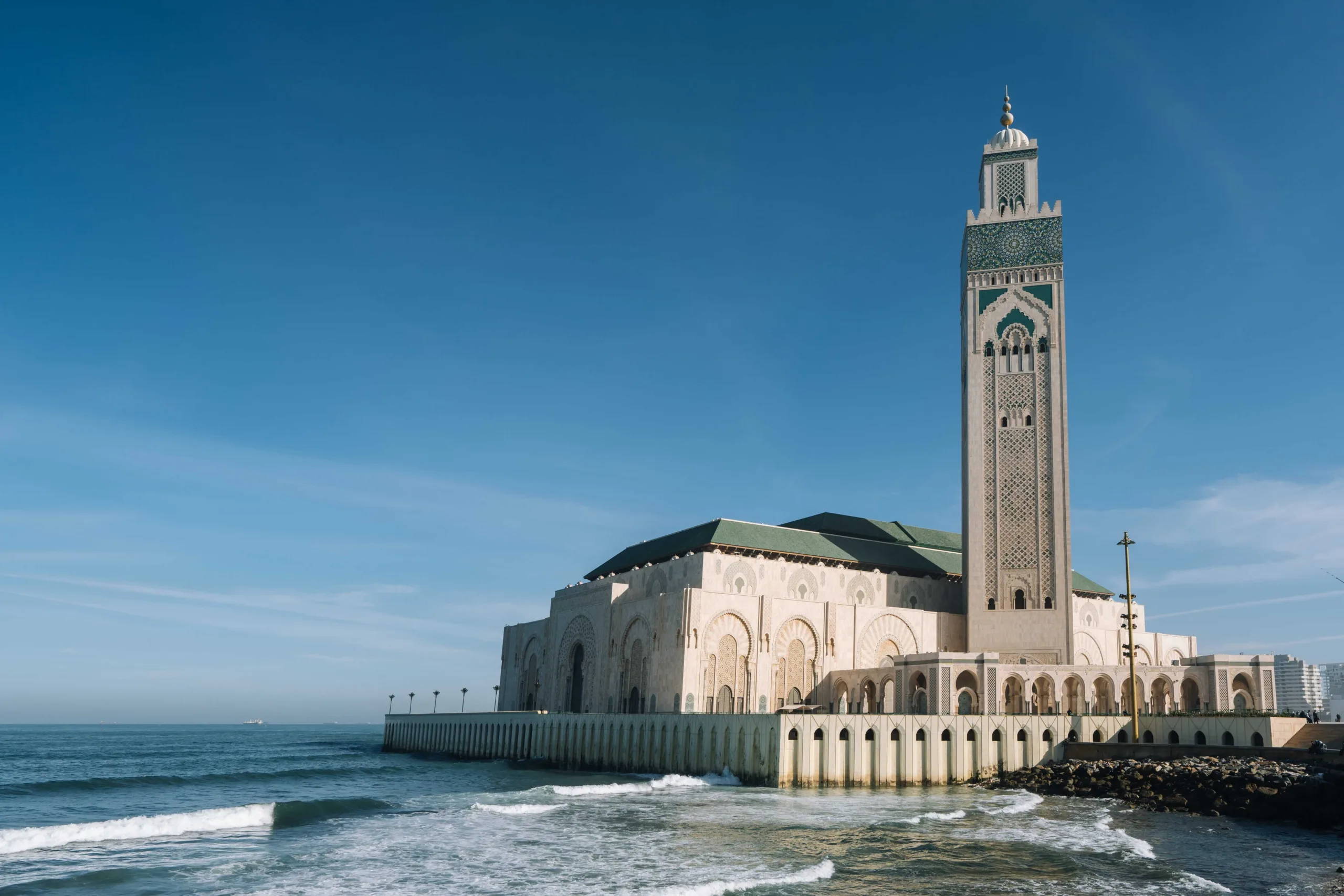

Morocco

Morocco (population ~38.4 million, 2025 est.) is one of Africa’s most commercially significant markets and a regional platform for manufacturing and export. 

It has deep strengths in phosphates and mining, a large and diversified industrial base (notably automotive, aerospace, textiles, and ICT/offshore services), and a strong tourism economy.
Morocco is also frequently cited as one of the stronger IP environments on the continent, including being ranked 22nd globally in the 2025 International IP Index.

Morocco is generally a practical jurisdiction to secure enforceable rights early—particularly for consumer brands and product-driven businesses—where clean trademark coverage, thoughtful class strategy, and timely opposition/enforcement planning can materially reduce risk as the business scales.

UTMPS Presence in Morocco

United Trademark & Patent Services established its Morocco office over a decade ago, strengthening the firm’s presence in North Africa and supporting clients operating in and through the Moroccan market.

From its base in Casablanca, UTMPS Morocco advises a wide range of international, regional, and multinational businesses across diverse industries on the protection,  management, and enforcement of their intellectual property rights. The team supports clients throughout the full IP lifecycle, delivering services tailored to both local requirements and broader cross-border strategies.

With professionals from varied technical and legal backgrounds, the Morocco office provides comprehensive trademark, patent, design, copyright, and enforcement services, working closely with clients and international counsel to ensure effective and commercially aligned outcomes.

Key IP Services in Morocco 

  • Trademark filings, oppositions, renewals, and enforcement
  • Patent protection, including pharmaceuticals and green technologies
  • Copyright registrations and advisory for software and digital content
  • Industrial design filings and renewals
  • Anti-counterfeiting enforcement, including border measures and litigation
  • IP due diligence and portfolio management

IP System Overview 

Morocco is a signatory to most of the international IP treaties, including the Paris Convention,  Berne Convention TRIPS (WTO)Patent Cooperation Treaty (PCT), the Madrid, Hague and Nice Agreements,  among others.   Morocco has continued to modernize its framework—most notably through joining the Geneva Act of the Hague Agreement for international design registrations. 

The Moroccan Office of Industrial and Commercial Property (OMPIC) is the competent authority for industrial property rights in Morocco, including trademarks, patents, and industrial designs.

This section provides a high-level overview of jurisdiction-specific IP protection requirements and is not intended to be comprehensive. For advice on your specific matter, please contact our IP experts.

Tanzania

Country Overview

The United Republic of Tanzania (population approx. 67.5 million, 2024) is a lower-middle-income economy driven by agriculture, tourism, and a growing services sector. Tanzania’s IP framework reflects its “Union” structure: Mainland Tanzania (Tanganyika) and Zanzibar are distinct jurisdictions for IP administration, and protection in one territory does not extend to the other requiring separate filings and portfolio strategies.

Recent developments have materially affected enforcement on the Mainland, including a 2025 Court of Appeal decision impacting the enforceability of ARIPO trademark registrations and a mandatory requirement to record trademarks with the Fair Competition Commission (FCC) for imported goods. The legal system is based on English common law, and national policy includes a “Vision 2025” focus on semi-industrialization alongside rapid growth in digital and financial services.

Tanzania IP System Overview

Tanzania is a member of the World Trade Organization (WTO) and party to the Paris Convention and the Patent Cooperation Treaty (PCT).

  • Mainland Tanzania: Administered by the Business Registrations and Licensing Agency (BRELA).
  • Zanzibar: Administered by the Zanzibar Business and Property Registration Agency (BPRA).

Regional Status: Tanzania is a member of ARIPO (African Regional Intellectual Property Organization). However, due to the Lakairo ruling (2025), ARIPO trademark designations are currently unenforceable on the Mainland and must be re-filed nationally. ARIPO patents and industrial designs remain valid.

This section provides a high-level overview of jurisdiction-specific IP protection requirements and is not intended to be comprehensive. For advice on your specific matter, please contact our IP experts.

Ethiopia

Country Overview

Ethiopia (population approx. 132 million, 2024) is one of Africa’s fastest-growing economies and a key investment destination in the Horn of Africa. Historically outside the major international IP frameworks, Ethiopia marked a major turning point in 2025 by acceding to both the Paris Convention and the Madrid Protocol, effective August 15, 2025. This integration allows for priority claims and international trademark designations, significantly modernizing the protection landscape for foreign investors.

As a landlocked nation with a state-led development model now transitioning toward liberalization, Ethiopia is focusing on manufacturing, agriculture, and energy. The Ethiopian Intellectual Property Authority (EIPA) serves as the centralized body for IP administration. The legal system is civil law-based, and recent reforms are aligning national laws with international treaty obligations to facilitate trade and foreign direct investment.

Ethiopia IP System Overview

Ethiopia is a member of the World Intellectual Property Organization (WIPO).

  • Paris Convention: Member (Effective August 15, 2025).
  • Madrid Protocol: Member (Effective August 15, 2025).
  • PCT: Ethiopia is not currently a member of the Patent Cooperation Treaty.

National IP Authority: Ethiopian Intellectual Property Authority (EIPA).

This section provides a high-level overview of jurisdiction-specific IP protection requirements and is not intended to be comprehensive. For advice on your specific matter, please contact our IP experts.

Sudan

Country Overview

Sudan (population approx. 50-51 million, 2026 proj.) is a member of the “Harare Protocol” (ARIPO), offering a regional route for patent protection. However, the operational environment is currently severely impacted by conflict. As of December 2025, the Trademark Office (part of the Commercial Registrar General) suspended operations in its temporary location in Port Sudan to facilitate a relocation of administrative functions back to Khartoum.

Sudan’s economy is transitioning through a period of significant instability. While historically dependent on oil and agriculture, the current focus for IP rights holders is maintaining the validity of assets during administrative disruptions. The Registrar General of Intellectual Property oversees the system, which generally follows British common law principles for trademarks and statutory provisions for other rights.

Sudan IP System Overview

Sudan is a member of the Paris Convention, the Madrid Protocol, and the Patent Cooperation Treaty (PCT).

  • Regional Membership: ARIPO (Harare Protocol for patents and designs). Note: Sudan is not a member of the ARIPO Banjul Protocol for trademarks.

This section provides a high-level overview of jurisdiction-specific IP protection requirements and is not intended to be comprehensive. For advice on your specific matter, please contact our IP experts.

Djibouti

Country Overview

Djibouti (population approximately 1.17 million, 2024) is a geostrategic gateway positioned at the intersection of the Red Sea and the Gulf of Aden. Its economy is overwhelmingly service-oriented, with transport, logistics, and port activities contributing between 76% and 85% of GDP. As the primary maritime hub for landlocked Ethiopia and a key transshipment node for regional trade, Djibouti’s intellectual property landscape is defined less by domestic manufacturing and more by its critical role in the global supply chain. The Djibouti Franc (DJF) is pegged to the US Dollar, providing a stable financial environment for the maintenance of long-term IP portfolios.

Located in the Horn of Africa, Djibouti leverages its political stability and advanced infrastructure—including the Doraleh Container Terminal and the Addis Ababa-Djibouti Railway—to serve as a logistics platform for East Africa. The government’s “Vision 2035” strategy focuses on transforming the nation into a regional commercial and logistics hub. Consequently, IP protection is increasingly vital for foreign investors operating within its free trade zones and for multinational brands securing their rights in this transit corridor.

Djibouti IP System Overview

Djibouti operates an independent national IP system and is not a member of regional organizations such as OAPI (Organisation Africaine de la Propriété Intellectuelle) or ARIPO (African Regional Intellectual Property Organization). Therefore, protection must be sought directly through the national office.

Djibouti is a member of the World Trade Organization (WTO) and party to key WIPO treaties, including the Paris Convention, the Berne Convention, and the Patent Cooperation Treaty (PCT).

National IP Authority: Office Djiboutien de la Propriété Industrielle et Commerciale (ODPIC).

  • Trademarks
  • Patents
  • Industrial Designs
  • Copyright

This section provides a high-level overview of jurisdiction-specific IP protection requirements and is not intended to be comprehensive. For advice on your specific matter, please contact our IP experts.