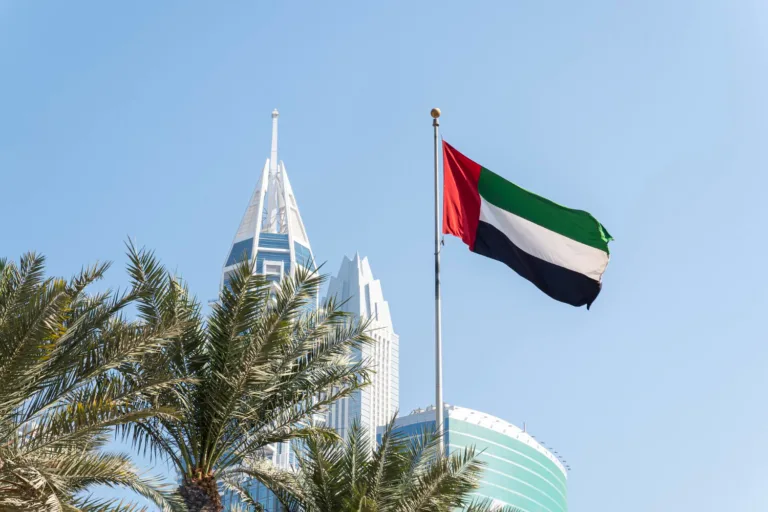

UAE Opens Class 33 for Trademark Filings

Brand owners can now seek national trademark protection in the UAE for alcoholic beverages following the opening of Class 33, which was previously unavailable for filing.

The trademark landscape in the United Arab Emirates has seen an important development with Class 33 now available for trademark filings through the UAE Ministry of Economy and Tourism (MOET) portal.

Class 33 covers alcoholic beverages, except beers, as well as alcoholic preparations for making beverages. Until now, the class had been restricted for trademark filings in the UAE. Its availability therefore creates a new opportunity for brand owners to seek national trademark protection for relevant goods in the country.

For businesses with established international portfolios, as well as those currently operating in or considering entering the UAE market, this is an important time to assess existing trademark protection and determine whether additional filings should be considered.

What does the opening of Class 33 mean for brand owners?

Brand owners with alcoholic beverage trademarks protected in other jurisdictions may previously have had a gap in their UAE trademark portfolios because Class 33 was unavailable for filing.

With applications now being accepted, businesses have an opportunity to review those portfolios and consider extending protection to the UAE.

This may be particularly relevant for international and regional brand owners with existing Class 33 registrations elsewhere, businesses with current interests in the UAE, and companies planning future launches or expansion into the market.

Why should portfolios be reviewed now?

The opening of a previously unavailable class creates a new filing opportunity for both existing and prospective market participants.

Brand owners should therefore consider reviewing their portfolios at an early stage to identify relevant brands and products for which UAE protection may now be appropriate.

As part of this review, businesses should consider whether they have Class 33 trademarks registered in other markets but not in the UAE, whether their current or planned UAE activities involve goods falling within Class 33, and whether there are gaps in their existing UAE trademark protection.

Where relevant, early filing should be considered now that applications in the class can be submitted.

Preparing a Class 33 filing strategy

Before proceeding with an application, brand owners should consider the scope of protection required and the appropriate specification for their relevant goods.

Clearance searches can also assist in assessing potentially conflicting rights before filing. For businesses managing portfolios across multiple jurisdictions, the UAE filing should be considered within the context of the wider trademark portfolio and the brand’s current or anticipated commercial activities.

The appropriate strategy will depend on the particular brand, products and existing portfolio.

How UTMPS can assist

United Trademark & Patent Services (UTMPS) can assist brand owners in assessing the implications of this development for their UAE trademark portfolios.

Our team can review existing portfolios to identify Class 33 protection gaps, conduct clearance searches, advise on appropriate specifications and filing strategies, and handle new applications through to registration.

We can also monitor potentially conflicting third-party applications and advise on enforcement where required.

Brand owners with relevant trademarks or products in Class 33 are encouraged to review their UAE protection and consider whether new filings should form part of their trademark strategy.

For further information or assistance with Class 33 trademark filings in the UAE, contact the UTMPS team.

Beyond the Law: The UAE’s Evolving Anti-Counterfeiting Enforcement Landscape

United Trademark & Patent Services (UTMPS) is pleased to share its latest contribution to The Global Legal Post’s Law Over Borders Anti-Counterfeiting Law Guide, examining the evolving enforcement landscape for rights holders in the United Arab Emirates.

Published on 8 September 2026, the market insight, “Inside the UAE enforcement ecosystem: Why operational coordination is the new anti-counterfeiting frontier,” considers how effective brand protection in the UAE increasingly depends not only on the strength of the law, but on coordination between the authorities responsible for putting that law into practice.

As one of the Middle East’s most sophisticated trade, logistics and re-export hubs, the UAE has developed a strong intellectual property framework supported by active enforcement authorities. However, the article highlights a shift in the challenges facing rights holders. With established legal remedies already available, attention is increasingly turning to how enforcement can be delivered consistently, efficiently and predictably across a complex institutional environment.

The insight examines the practical implications of coordination between federal and emirate-level authorities, including differences that may arise in documentation requirements, evidentiary expectations, administrative procedures, raid protocols and enforcement timelines.

It also considers the particular demands of border enforcement in a high-volume trading environment. With significant volumes of goods moving through ports, airports, free zones and re-export channels, effective anti-counterfeiting action increasingly relies on high-quality intelligence, product authentication resources, risk-based targeting and close cooperation between customs authorities and rights holders.

At the same time, counterfeit activity itself is becoming more sophisticated. Traditional copying of trademarks is increasingly accompanied by look-alike products that reproduce packaging, colour schemes, trade dress and broader brand presentation without necessarily using an identical trademark. These practices create more nuanced enforcement questions and require authorities and advisors to look beyond straightforward visual comparisons.

The expansion of e-commerce and social media has added another layer of complexity. Online monitoring can make infringement more visible, but identifying sellers, preserving digital evidence and translating online intelligence into physical enforcement action can remain challenging. The article therefore identifies stronger integration between digital investigations and on-the-ground enforcement as an increasingly important component of an effective anti-counterfeiting strategy.

For businesses operating in the UAE, these developments reinforce the importance of moving beyond reactive enforcement. Effective brand protection increasingly requires sustained engagement with relevant authorities, tailored product identification materials, continuous intelligence sharing and coordinated digital and physical enforcement strategies.

The article also looks ahead to the next stage of enforcement modernization in the UAE, including greater procedural harmonization, technology-enabled risk targeting, continued authority training and deeper public-private cooperation.

As counterfeit networks become more agile and global trade increasingly digital, the UAE remains well positioned to strengthen its role as a leading jurisdiction for intellectual property enforcement and to develop increasingly coordinated approaches suited to high-velocity international markets.

Read “Inside the UAE enforcement ecosystem: Why operational coordination is the new anti-counterfeiting frontier” in The Global Legal Post’s Law Over Borders Anti-Counterfeiting Law Guide.

Morocco’s IP Growth Signals a Market of Expanding Brands and Innovation

Morocco is strengthening its position as an attractive destination for business expansion, brand development, investment, and innovation. The latest industrial property figures published by the Moroccan Office of Industrial and Commercial Property (OMPIC) indicate that companies, entrepreneurs, universities, and inventors are increasingly seeking to protect and commercialize their intangible assets in the country.

For international brand owners, this activity sends an important message: Morocco is not only a market in which businesses are selling their products and services, it is also a jurisdiction in which companies are establishing their presence, developing brands, and investing for long-term growth.

Strong Trademark Activity

During the first half of 2026, OMPIC received 16,911 trademark applications, representing a 5% increase compared with the same period in 2025.

The chemical industry, particularly sanitary products and detergents, and advertising and business-management services were among the most active areas. Pharmaceutical products accounted for 16% of applications, while education, training and entertainment services, and food products each represented approximately 11%.

This sustained trademark activity reflects a dynamic commercial environment. It also suggests that brand owners are recognizing the importance of securing their rights before launching products, appointing distributors, opening new locations, or expanding their activities in Morocco.

As more companies enter the market, early trademark protection becomes increasingly important. Delayed filing can expose brand owners to registration conflicts, unauthorized use, counterfeiting, and costly enforcement proceedings.

Innovation and Product Development

Industrial design activity also increased significantly. A total of 3,510 industrial designs were recorded during the first half of 2026, representing a 9% year-on-year increase.

Packaging-related designs led this category, followed by building materials and office and educational equipment. This growth demonstrates that businesses are investing not only in brand names but also in product appearance, packaging, and visual identity as important competitive assets.

Patent activity provides further evidence of Morocco’s developing innovation ecosystem. OMPIC received 1,557 patent applications, an increase of 7% compared with the first half of 2025.

Pharmaceutical technologies led patent activity, followed by biotechnology and fine organic chemistry. Moroccan universities accounted for 47% of domestic patent applications, highlighting their important role in research, technology development, and knowledge-based innovation.

Protecting IP in a Growing Market

Together, these figures present Morocco as a market where commercial activity and innovation are advancing side by side. Companies planning to enter, invest in, or expand across the country should incorporate intellectual property protection into their market-entry strategy from the outset.

The United Trademark & Patent Services Morocco office has continued to grow alongside this expanding market. Our experienced bilingual team in Casablanca supports local and international clients across trademarks, patents, industrial designs, enforcement, and portfolio management.

Source: OMPIC’s published industrial property results for the first half of 2026.

UAE Introduces Music Licensing Fees for Commercial Use

From 1 December 2026, businesses in the UAE that play music commercially will be required to obtain an annual music licence under Ministerial Resolution No. 136 of 2026 and the Ministry of Economy and Tourism’s new Collective Management in Music Guide. The Guide states that collection under the Ministry-approved pricing system will begin on that date.

The initiative represents an important development in the UAE’s copyright framework. Copyright grants creators and other rights holders exclusive rights over certain uses of their musical works and sound recordings, including their performance or communication to the public.

Playing protected music in a commercial setting may therefore require separate permission from the relevant copyright holders. The new framework covers restaurants, cafés, hotels and floating hotels, shopping centres, fitness centres, premium airlines, radio and television broadcasters, concerts, and similar events. Licensing fees vary according to the type and size of the business and how the music is used. Venues using DJs or intensive or live music are subject to a separate tariff reflecting the nature and scale of that use.

The Guide includes the following annual tariffs:

  • Restaurants and cafés: AED 1,500 for up to 50 seats, AED 2,700 for 51–100 seats and AED 4,800 for 101–200 seats. Each seat above 200 attracts an additional AED 20, subject to an annual cap of AED 6,000.
  • Restaurants and cafés using a DJ, nightclubs and equivalent venues: AED 2,500 for up to 50 seats, AED 3,500 for 51–100 seats and AED 6,500 for 101–200 seats. Each seat above 200 attracts an additional AED 20, subject to an annual cap of AED 8,000.
  • Retail outlets and commercial complexes: AED 1,700 for premises of up to 300 square metres and AED 3,400 for premises of 301–700 square metres, plus AED 60 for each additional 25 square metres, subject to an annual cap of AED 20,000.
  • Large shopping centres: AED 625 for the first 100 square metres of common area, plus AED 50 for each additional 25 square metres, subject to an annual cap of AED 50,000.
  • Fitness centres: AED 1,700 for premises of up to 300 square metres. Larger premises are charged AED 5 for each additional square metre, subject to an annual cap of AED 6,000.
  • Hotels and floating hotels: fees vary by star classification and number of rooms. Charges range from AED 50 per room for smaller one- and two-star properties to AED 25,000 for four- and five-star properties with more than 200 rooms.
  • Premium airlines: AED 5,000 for up to 50 passenger seats, AED 10,000 for 51–300 seats, AED 30,000 for 301–500 seats and AED 45,000 for more than 500 seats.
  • Radio: 1 per cent of annual income for general programming and 3 per cent for music stations, subject to a minimum annual fee of AED 1,700.
  • Television: 1 per cent of annual income for general programming channels and 0.25 per cent for news channels, subject to a minimum annual fee of AED 1,700.

For hotels, the room tariff applies only to music used in guest rooms. Restaurants, halls, shops and entertainment facilities within a hotel are assessed separately under the tariff applicable to each activity. In shopping centres, music used in common areas is calculated by reference to the relevant common area.

The Guide requires tariffs to correspond to the actual use of music, prohibits discrimination between users in equivalent circumstances and requires compliance with Ministry-approved collection ceilings. Activities not expressly classified in the tariff matrix, including sporting events, theatrical performances and cinemas—may be governed by relevant contracts. The Ministry may add or amend user categories and determine the applicable tariffs and controls. The approved tariff system may also be reviewed periodically.

Fees will be collected by two Ministry-licensed collective management organisations: Music Nation and the Emirates Music Rights Association. Collective management allows music rights to be licensed centrally and royalties to be distributed to eligible composers, lyricists, performers, producers, publishers and other rights holders.

Where more than one collective management organisation is licensed, the organisations must agree on a joint collection mechanism so that the total amount collected from a user does not exceed the Ministry-approved tariff ceiling. A collective management organisation may not amend the tariff matrix or an approved collection or distribution mechanism without prior Ministry approval. No amount may be imposed on users before the Ministry approves the relevant matrix.

Collective management permits are granted for one year and may be renewed. This statutory one-year term applies expressly to the permits held by collective management organisations. Businesses should confirm the duration and renewal terms of their individual music-use licences with the relevant collecting organisations.

Ten per cent of the amounts collected will be allocated to a Cultural Support Fund for Music before returns are distributed to members. This allocation forms part of the 25 per cent of total collections addressed under the Executive Regulations, and the money must be maintained in a separate bank account.

The Fund is intended to support music creation and production, live performance, training, workshops, artistic residencies, grants, heritage preservation, cultural exchange and the regional and international promotion of Emirati music. It will operate under Ministry supervision and will be subject to governance, conflict-of-interest, financial-control and audit requirements.

Exemptions apply to educational and academic institutions, government entities, uses associated with national occasions, and personal celebrations and events of a non-commercial nature. The Ministry may exempt additional uses or categories by resolution.

Importantly, the charge is a copyright licensing fee rather than a tax. A personal streaming subscription does not generally include the public-performance rights required to play music commercially.

The Ministry has broad supervisory powers over licensed collective management organisations. It may conduct on-site inspections, review relevant records and technical and financial systems, receive complaints from rights holders and music users, seek amicable settlements, impose administrative sanctions or cancel a collective management permit for non-compliance.

The Guide’s annex contains the approved annual tariff matrix. However, businesses should confirm the applicable tariff, calculation method, licensing procedure and joint-collection arrangements against any further Ministry guidance before implementation. Existing contracts remain effective according to their terms to the extent that they do not conflict with UAE laws and regulations.

Sources: UAE Ministry of Economy and Tourism, Collective Management in Music Guide, Version 1.1, issued June 2026; Ministry announcement as reported by Sharjah24, Khaleej Times, and Gulf News.

New UAE Commercial Fraud Regulations Strengthen Brand Protection

The certificate has been issued. The trademark is registered. The brand is protected, right?

Not entirely.

Trademark registration gives you the legal foundation to act. But it cannot tell you when a counterfeit enters the market, where it is being sold or what customers experience when they mistake it for your product.

A counterfeit does more than imitate a name or logo. It trades on the trust your business has worked to build. If the product is of poor quality or unsafe, the counterfeiter may disappear, but the damage can remain with your brand.

That is why effective brand protection must go beyond registration.

At United Trademark & Patent Services, we help rights holders turn registered trademarks into practical protection. We monitor physical and online markets, develop product-authentication materials, investigate suspected counterfeits and coordinate enforcement action with the relevant UAE authorities. Our role is to help clients understand the available options and identify the most effective route for each situation.

The UAE already has a well-established range of anti-counterfeiting measures, including customs recordals, border seizures, market inspections, administrative complaints and court proceedings. The new Executive Regulations on Combatting Commercial Fraud, in force since 13 August 2026, provide brand owners with an additional enforcement tool.

The Regulations provide clearer procedures for inspecting, recalling, seizing, re-exporting and destroying counterfeit and fraudulent goods. They also strengthen coordination between authorities and introduce safeguards intended to prevent seized goods from returning to the market.

Importantly, the Regulations introduce clear operational timelines once counterfeit goods are identified. Upon being notified of a withdrawal decision, a supplier must immediately stop selling or displaying the affected goods and take the necessary steps to withdraw them from markets and warehouses within 24 hours.

For brand owners, this places even greater importance on early detection, reliable product-authentication materials and prompt engagement with the relevant authorities. The faster counterfeit goods can be identified and supported by reliable evidence, the more effectively rights holders can use the UAE’s available enforcement mechanisms.

For businesses with trademarks registered in the UAE, this is an opportunity to add another layer to their brand-protection strategy. Registration establishes your legal rights, while monitoring, authentication and enforcement help protect the reputation and customer trust that give your brand its value.

United Trademark & Patent Services supports brand owners at every stage, from securing rights to identifying infringements and coordinating action through the UAE’s available enforcement channels.

We are here to help you strengthen your brand-protection strategy in the UAE.